Les Canards de Paris: a school trip that makes a splash
A school trip in Paris often means a museum, a packed lunch in the bag, and a teacher counting children every three minutes.
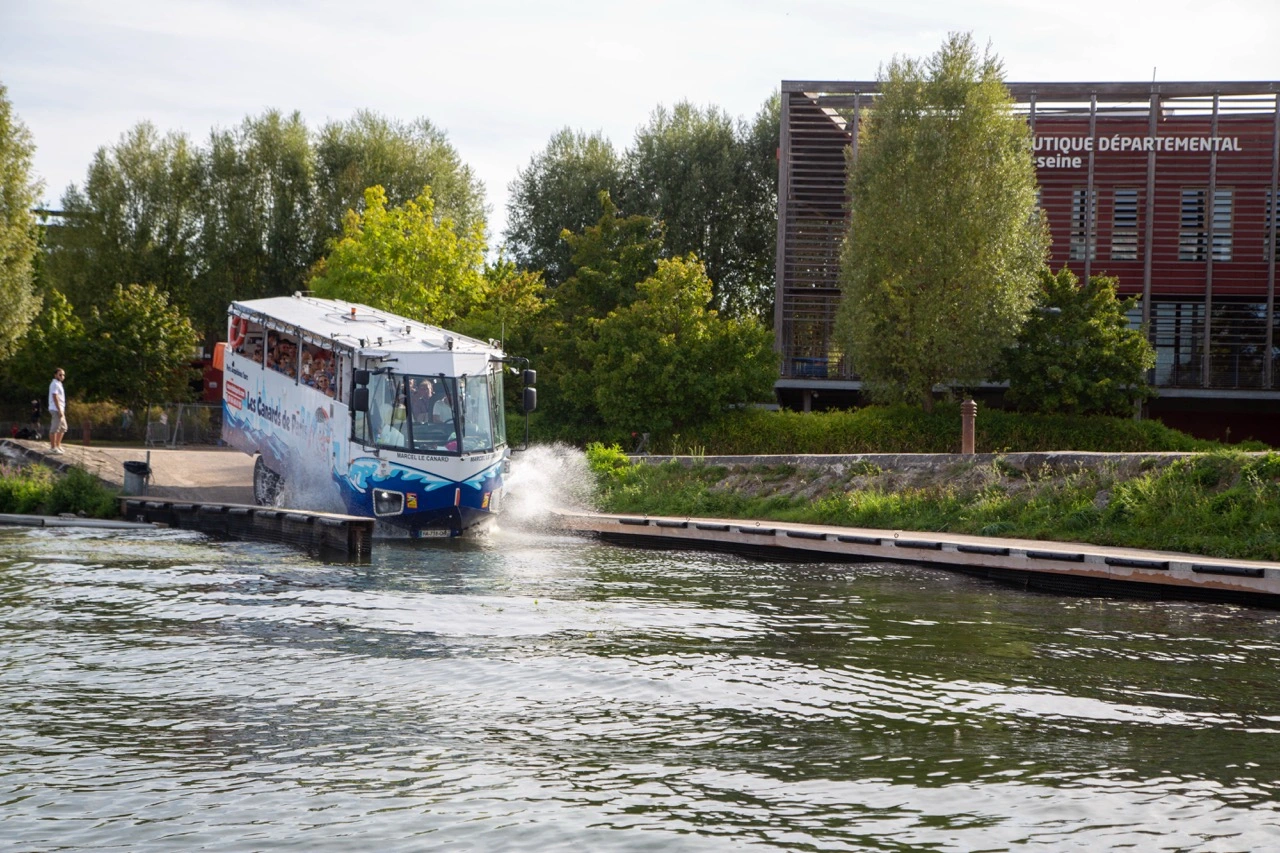
With Les Canards de Paris, things take a more unexpected turn: an amphibious bus, famous monuments, bursts of laughter, lively anecdotes… and that unforgettable moment when the bus drives straight into the Seine.
We asked Marie, a teacher in a Paris’s 20th arrondissement school, to tell us about it. She has been bringing her classes on board for three years now. And if she keeps coming back, it is not just for the “wow” factor: it is because the children get to see, life-size, everything they first started exploring in the classroom.
A cheerful way to work on geography, history… and the laughter muscles too.
A teacher who keeps coming back for a reason
Marie knows a thing or two about school trips. She has been teaching for 30 years, which means she has seen plenty of notebooks, schoolbags, coaches, “Miss, I’ve lost my cap!” moments, and “When are we having our picnic?” questions asked at exactly 10:08 a.m.
After many years teaching older primary school children, she now works with younger pupils, aged around 6 to 8, in Paris’s 20th arrondissement. For the past three years, she has been bringing her classes on board Les Canards de Paris.
Her first encounter with our rather unusual bus did not happen during a school staff meeting, but with her family. “Originally, it was my mum and my nephews who introduced me to Les Canards de Paris,” Marie explains. She tried the experience with them first, and very quickly thought: her pupils would absolutely love this class trip idea in Paris.
Since then, Marie has come back with different primary school classes, from 6- to 8-year-olds. And she is not the only one to have climbed aboard. One colleague joined her this year, another came on her recommendation with a class of 5-year-olds as part of a project on the water cycle, and a former colleague now brings his own class on the tour too.
“I came back because I really enjoyed it!” Marie sums up. Simple, clear, effective. And when a teacher comes back three years in a row with her pupils, you start to think that our Marcel (that’s the bus, not the driver) must be ticking quite a few boxes.
Before the trip: Paris starts in the classroom
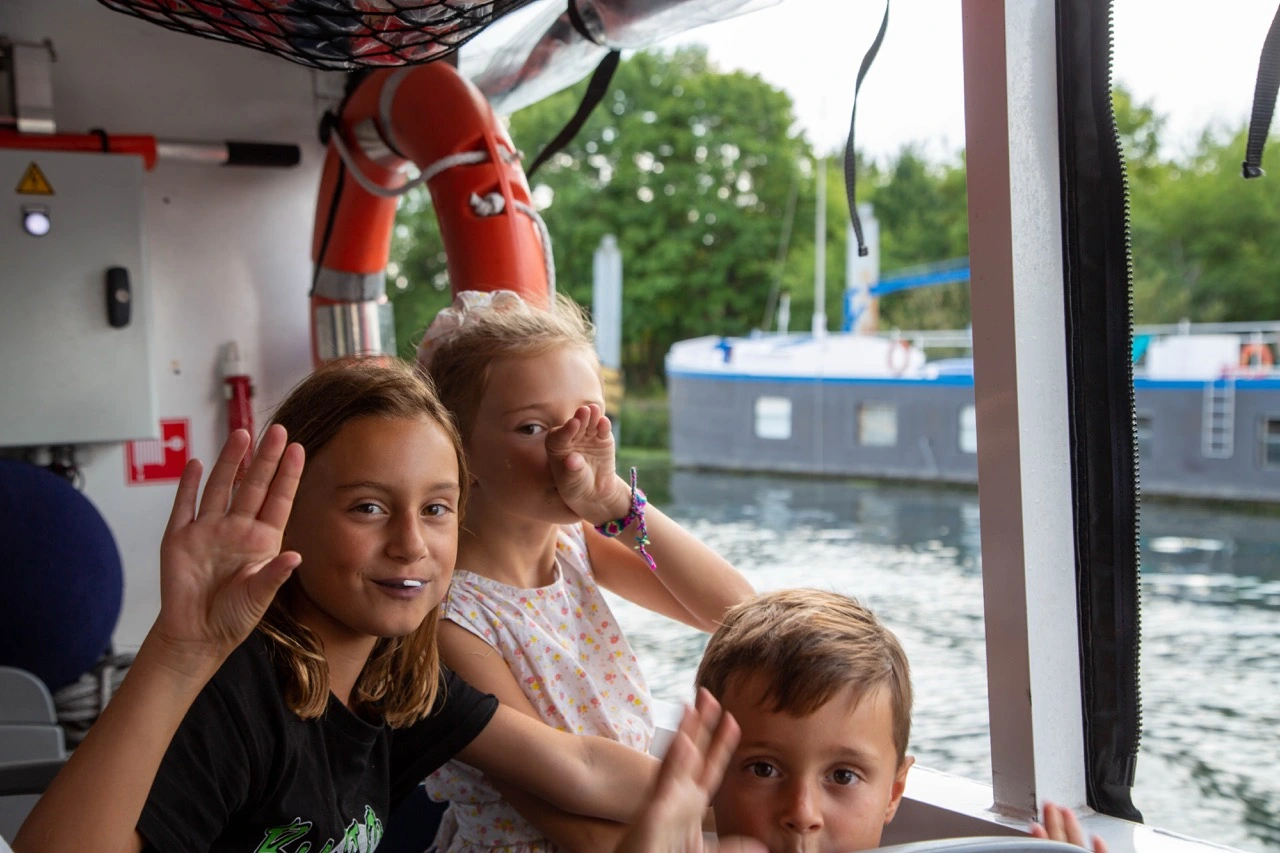
For Marie, a year-end school trip with Les Canards de Paris does not come out of nowhere. Before the children climb aboard, Paris has already begun to take shape in the classroom.
“This trip is the final step in our classroom project,” she explains. With her pupils, she worked on Paris, its monuments, its history, the Seine, and city maps… So once they are on board, the children are not just looking out of the window: they are recognising places, stories and landmarks they have already started to explore in class.
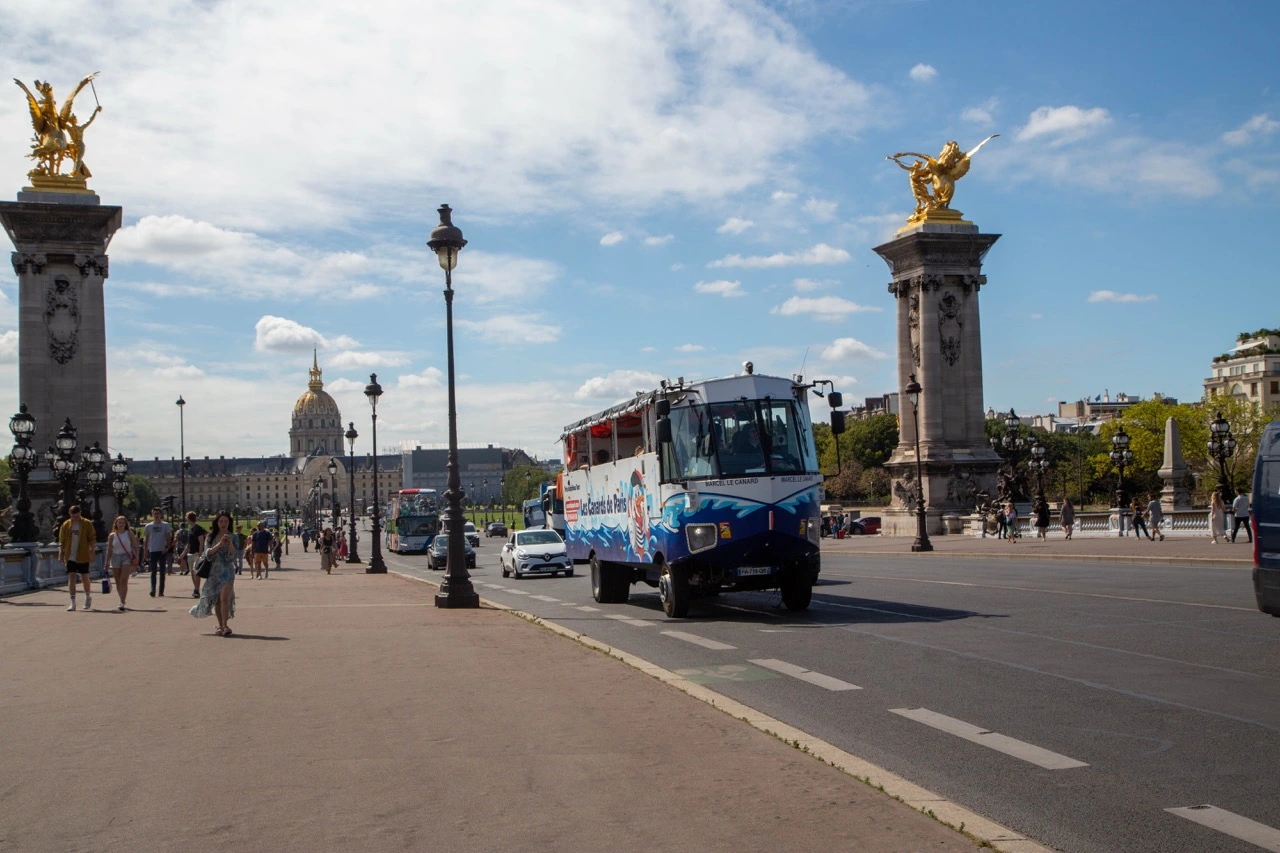
Les Invalides, for example, had been introduced through photos and drawings. So when the bus drove past the monument on the day of the trip, the children recognised it straight away. And not exactly quietly, apparently. “When we passed it, they shouted because they knew it!” Marie recalls.
For other classes, the trip can also be a way to wrap up a project on the water cycle. One of Marie’s colleagues did just that, bringing a class of 5-year-olds on board Les Canards de Paris. After talking about water, the Seine, and even visiting the Paris Sewer Museum, what could be better than a bus that drives… and then floats?
During the tour: Paris becomes real
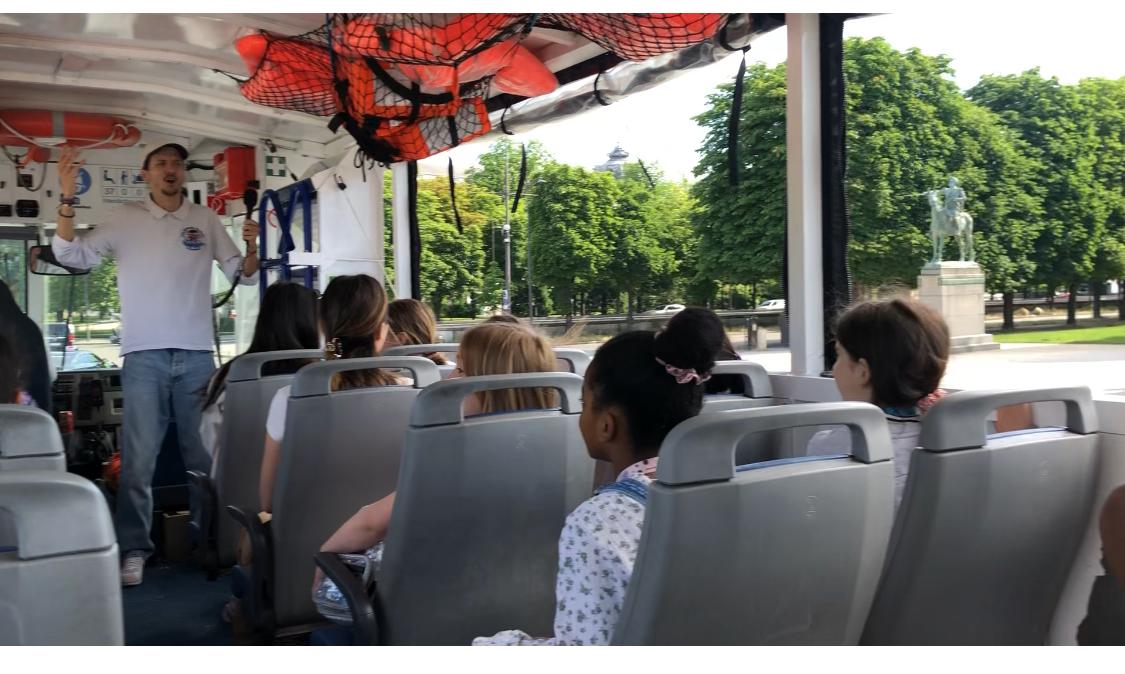
Once on board, the children do not see Paris as just a string of monuments passing by. They recognise things, make connections, react. And sometimes, they sing. Very loudly.
Quand les monuments sortent du cahier
When the monuments leave the textbook
“What is really interesting about this trip is that it also helps the children discover western Paris, an area we do not visit that often as Parisians, even though it has some really interesting monuments,” Marie explains.
The Eiffel Tower, the Arc de Triomphe, Les Invalides, Place de l’Étoile… These are places the children may have seen in photos, on a map, or in a book. But they take on a whole new dimension when they suddenly appear for real, right outside the bus window.
Joe Dassin, La Fontaine and some very proud pupils
Marie had also prepared a few lovely bridges between the classroom and the tour. Since she already knew the route, she knew that the guide would play Les Champs-Élysées by Joe Dassin, one of those classic French songs that many people here know by heart.
So the song was worked on in class beforehand, as part of the weekly music activity.
On the day of the trip, when the first notes started playing, the children were ready. “They all sang along with the other passengers, who were completely stunned,” Marie recalls.
The same thing happened near the Jardin du Ranelagh, where there is a statue of Jean de La Fontaine, the famous French writer whose fables are still taught to children in school. At the foot of the statue are the crow and the fox, from one of his best-known fables.
Once again, Marie had prepared the ground. The children had learned The Crow and the Fox before the trip. So when the bus drove past the statue, they were able to recite the fable on board, “very proudly”.
And then, of course, there is the guide. “The children really enjoy interacting with the guide,” says Marie. Questions, fun facts about Paris, “quack quack” to shout back, “wow!” to call out whenever a new monument appears… The children take part, laugh, listen and wonder.
The guides have a precious talent: they know how to speak to children without losing the adults along the way.
The big splash kept secret
And all the while, Marie keeps one little secret up her sleeve: the big splash.
The children know they are going to discover Paris, its monuments and its stories. But the moment when the bus enters the Seine? That part is not on the official programme.
At first, they can tell that the bus has “a funny shape”. Then the Caribbean music kicks in, the excitement rises, and Marcel gets ready to do what he does best: leave the road and head for the water.
At that point, let’s be honest, classroom worksheets do not stand a chance.
After the trip: putting Paris back on the map
Once the children have stepped off the bus (perfectly dry, but still a little damp with emotion) the project gently comes to an end back in the classroom.
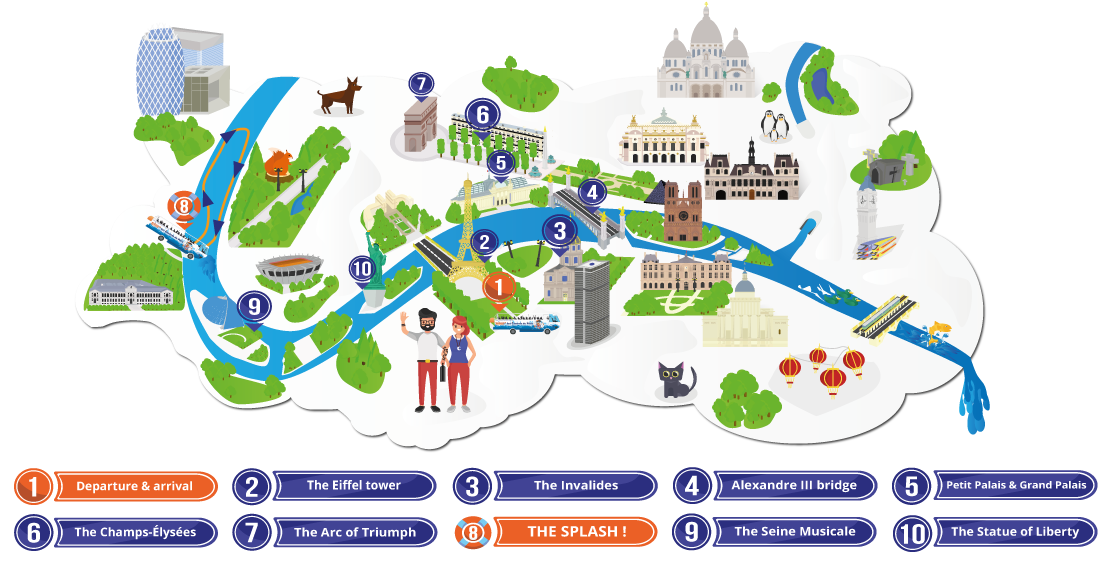
Marie likes to go back over the route map, which is available here on the Les Canards de Paris website. It is a simple way to revisit what the children have seen, retrace the bus journey, and bring a little order to this great Parisian adventure.
Where did the Seine flow? Which side was the Right Bank? And the Left Bank? Which way did the bus go before reaching the water? Which monuments did the children recognise? Did they see Les Invalides before or after the Eiffel Tower?
These questions help the class work on space, direction, landmarks and city vocabulary.
The trip also becomes a great starting point for storytelling. “First, we got on the bus… then we saw the monuments… next, the bus drove into the Seine…” Suddenly, time markers have a much more exciting job than they usually do in a classroom exercise.
Of course, there is the big splash. But what stays with the children is also the laughter with the guide, the “wows” in front of the monuments, and the stories told in a way they can truly understand. Even for Marie, who already knows the route well, the tour still has its surprises: “I always learn something new, even when I come back.” The adults enjoy it too. This year, one of Marie’s colleagues was discovering Les Canards de Paris for the very first time. Her verdict? “She told me she spent the whole two hours smiling from start to finish.”
“There is something joyful, funny, cheerful, educational and playful about it,” Marie sums up. We could not have said it better.